Every collector knows what they own.
Almost none know what they wear.
Horalog is a logbook for watch collections. You record what went on your wrist today. It gives back what's hibernating, how your rotation actually behaves, and an independent read of the whole collection.
Which of your watches has gone unworn the longest? And which one is eating the whole rotation?
These are the two questions every collector wants answered and almost nobody can. We remember the latest arrival, the favourite, the one due for service. What falls out of memory is the middle of the collection: the piece you love that hasn't left the box in six weeks without you noticing. Here it becomes a chart, and it updates itself with every entry.
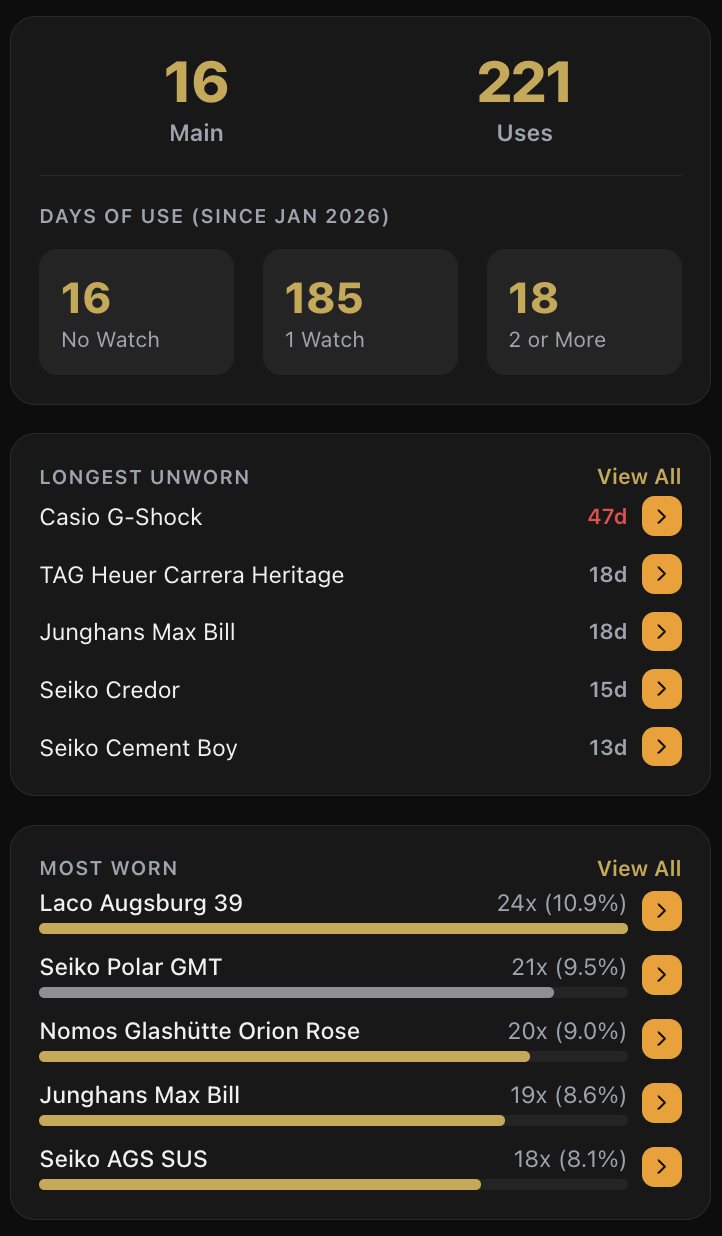
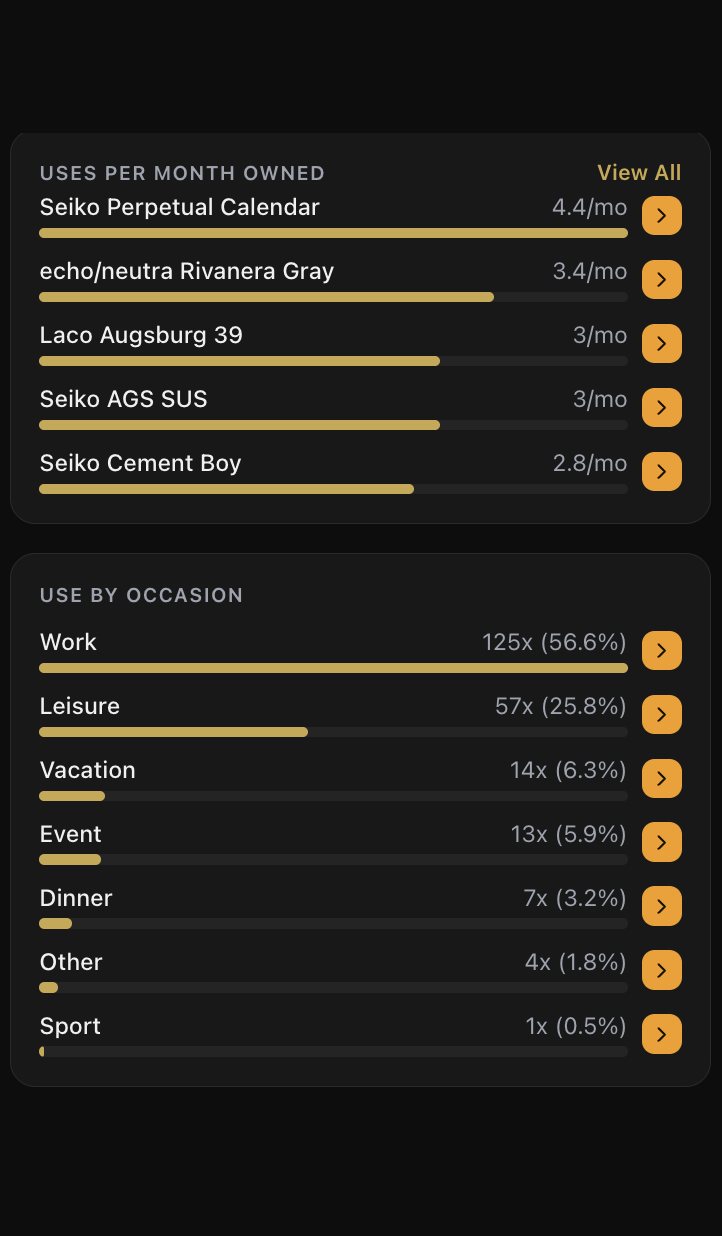
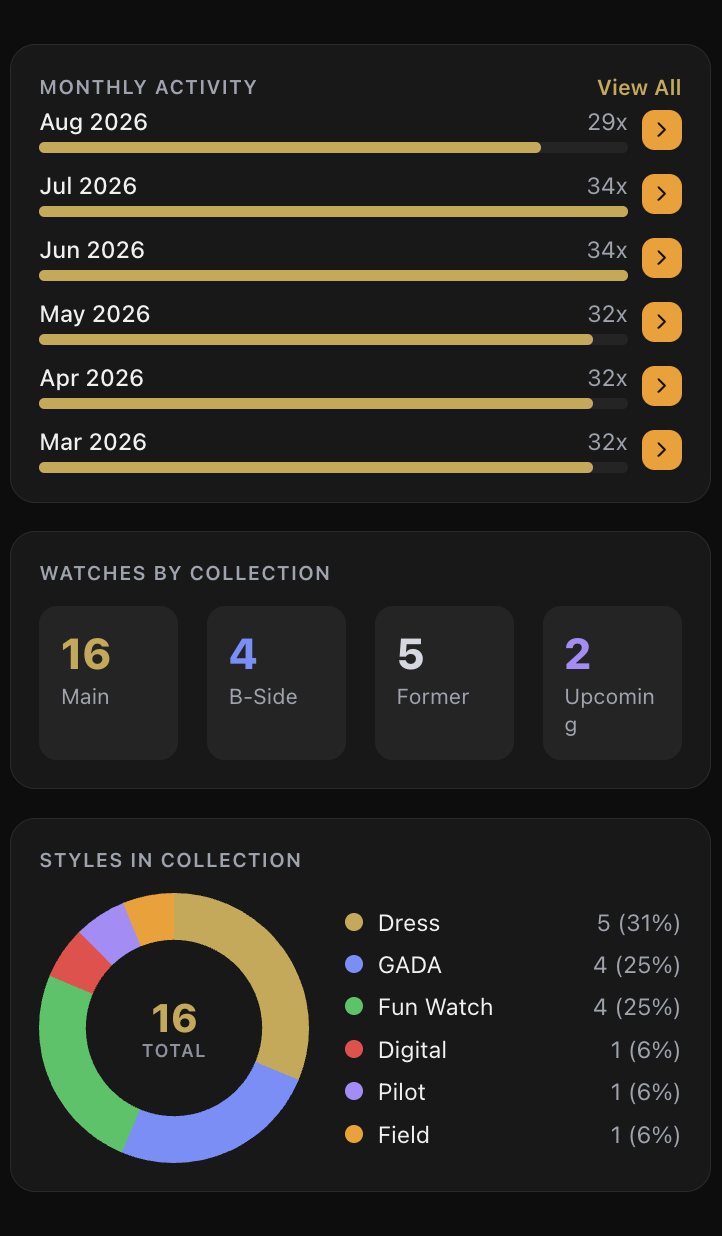
Below: a real collection, 16 watches, 221 wears logged since January
Longest unworn
Forty-seven days. No collector guesses that number right about their own collection.
Rotation · the five most worn
No single piece passes 11% of the rotation. Across 16 watches that is balance, and you only know by measuring.
An independent opinion on your collection, and on your next purchase.
Nobody has this. A collector friend is biased, a dealer is more biased, and forums argue about references, not about your collection. Horalog reads your profile, your wear history and what you already own, then writes a report: the collection's DNA, where it is unbalanced, what is hibernating, what is off-key, and what would actually be worth buying. Scored, and undiplomatic.
The Classicist with a Playful Streak — Bauhaus Head, Seiko Heart.Collection DNA · report generated by Horalog
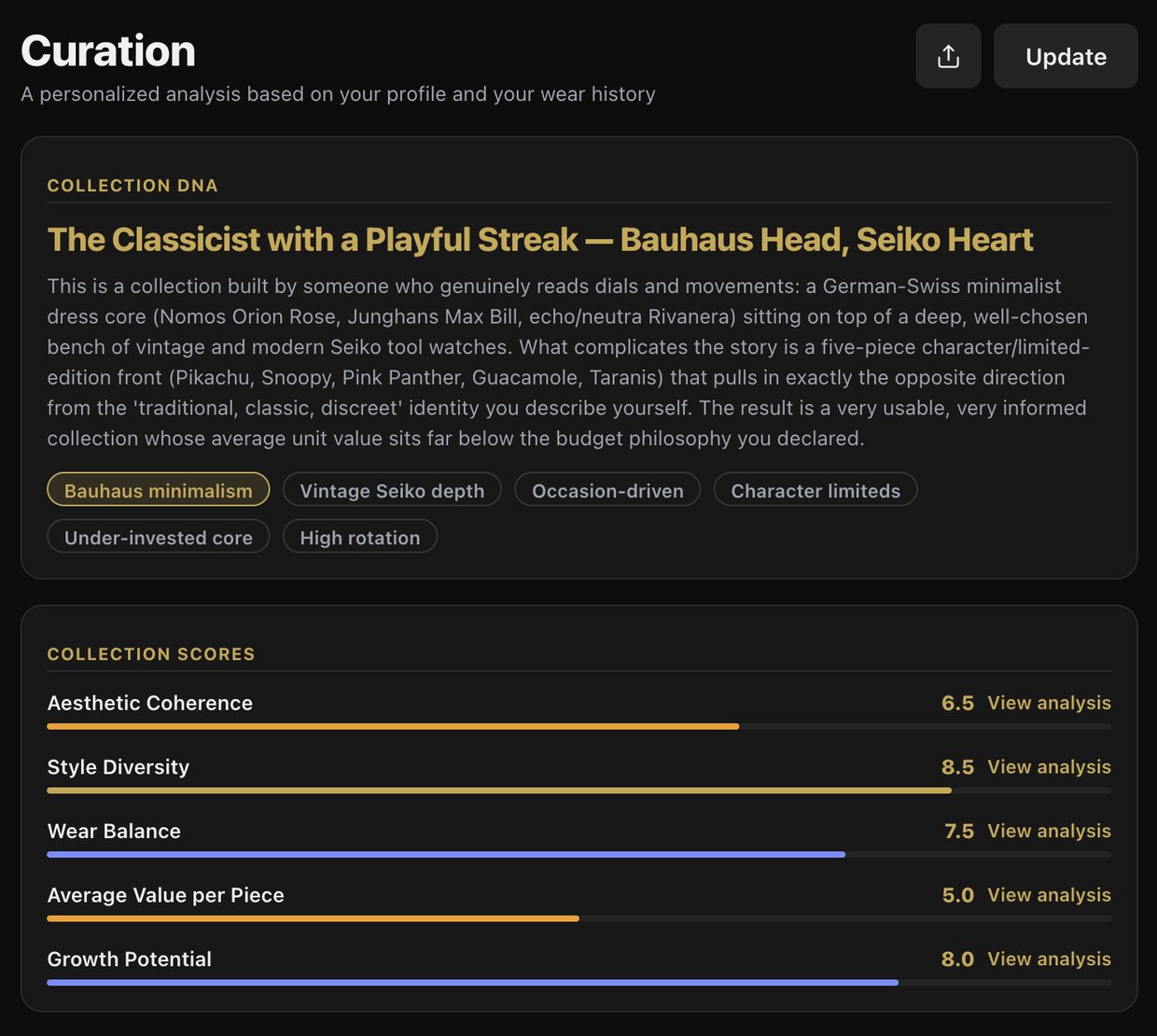
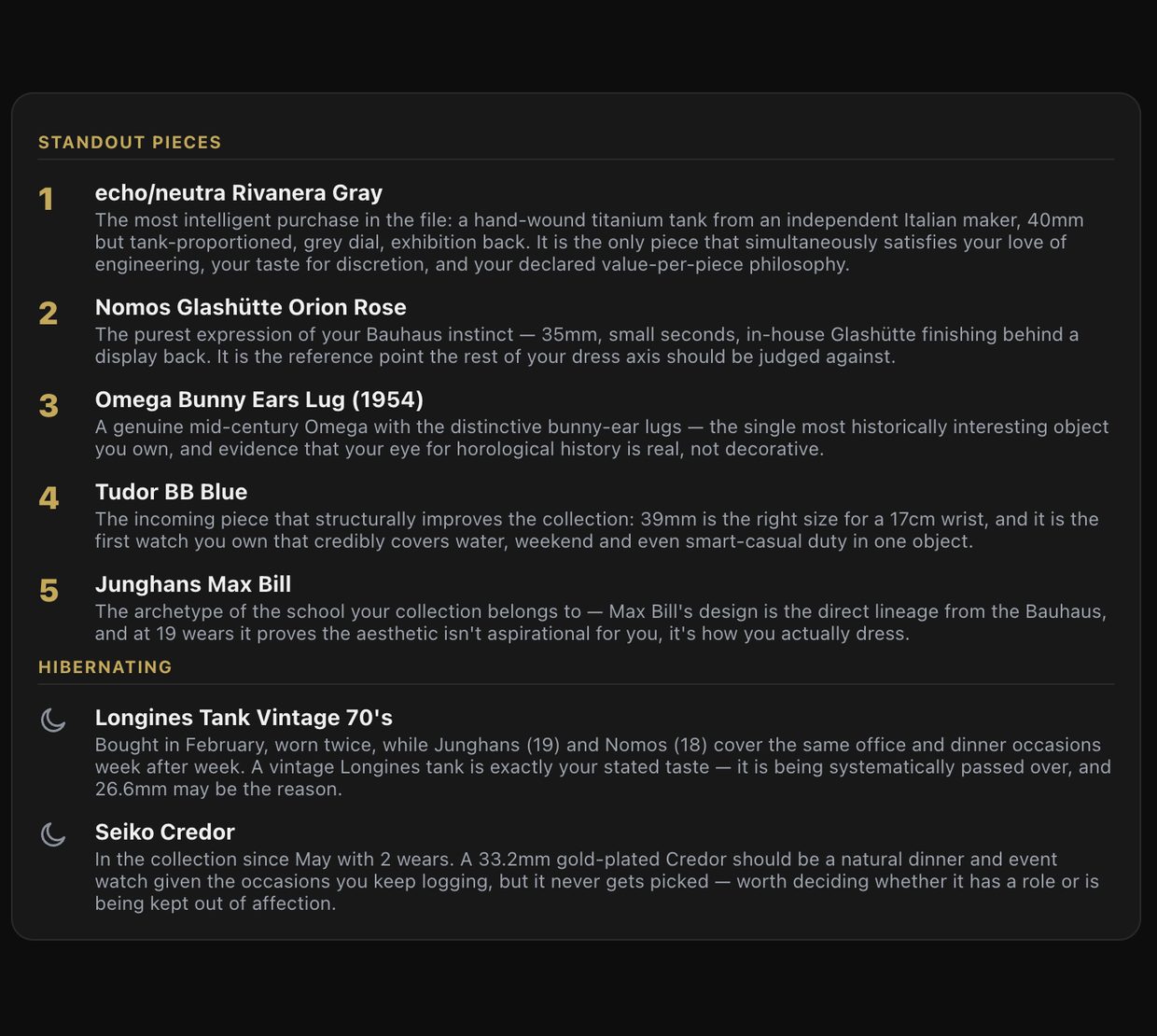
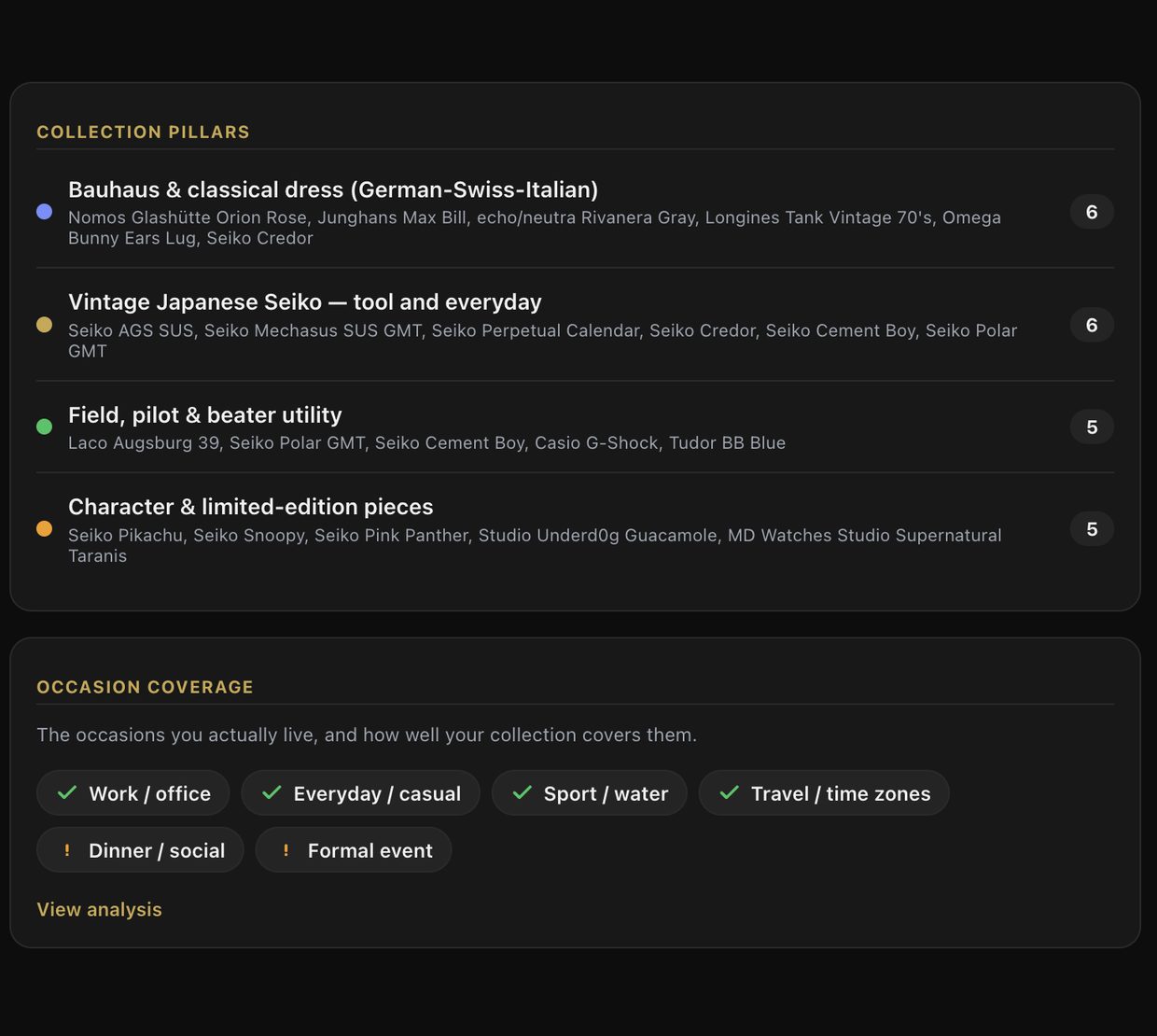
Real screens from the report generated for the collection above. It also covers what is off-key and an action plan of what to sell, what to keep and what to buy. The app runs in Portuguese and English.
Enter the collection
Brand, reference, calibre, case, strap, purchase. Or just the name, and the rest whenever you feel like it.
Log the day
Which watch, which occasion, a wrist shot if you like. Two taps. It is the only habit the app asks of you.
Let the data build up
The tool gets better on its own. In month one you have a list. By month six you have a portrait of how you actually wear watches, and the curation report has something real to say.
The good part of measuring is having something to show.
A collection nobody sees is a collection that only exists in a drawer. The app builds cards ready to post (the month's podium, the portrait of the collection, the records and the habit) already in Instagram format, with your handle and your numbers. It is content no other collector has, because it comes out of your own log.
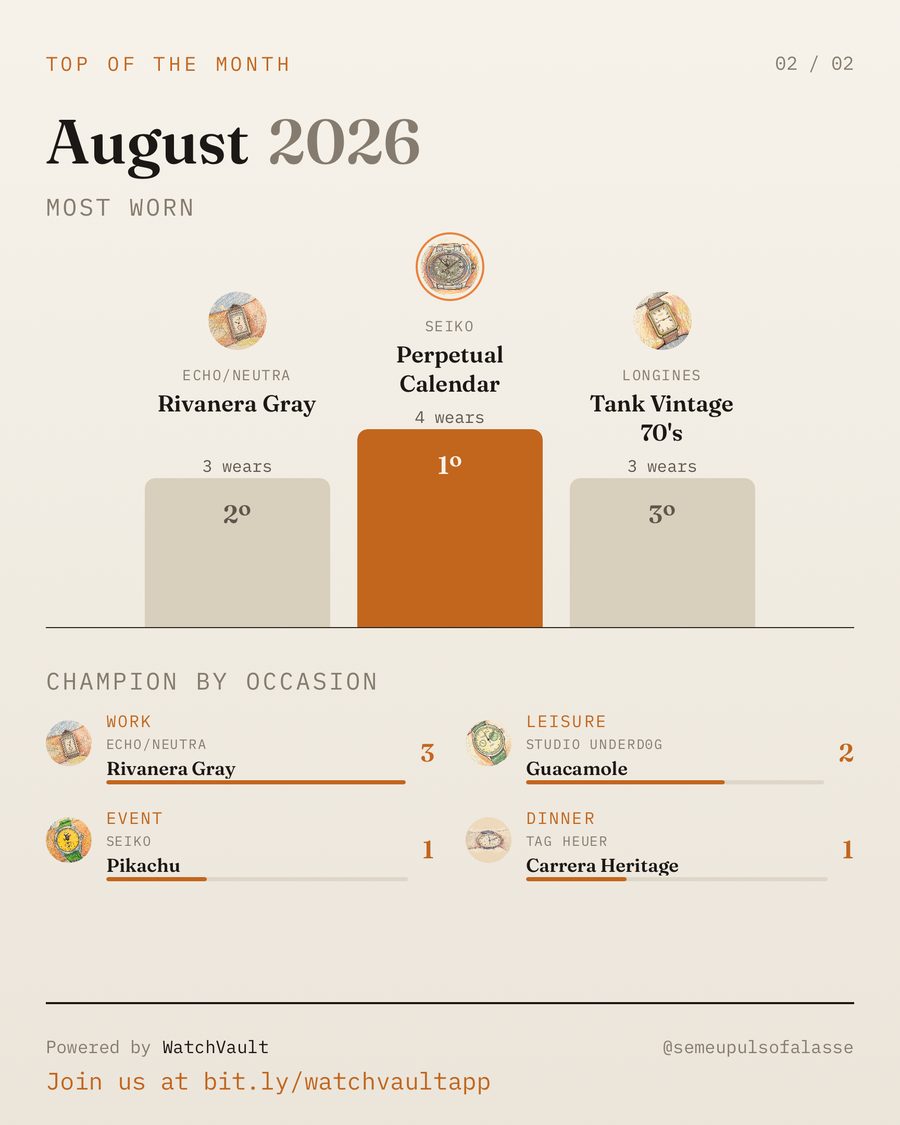
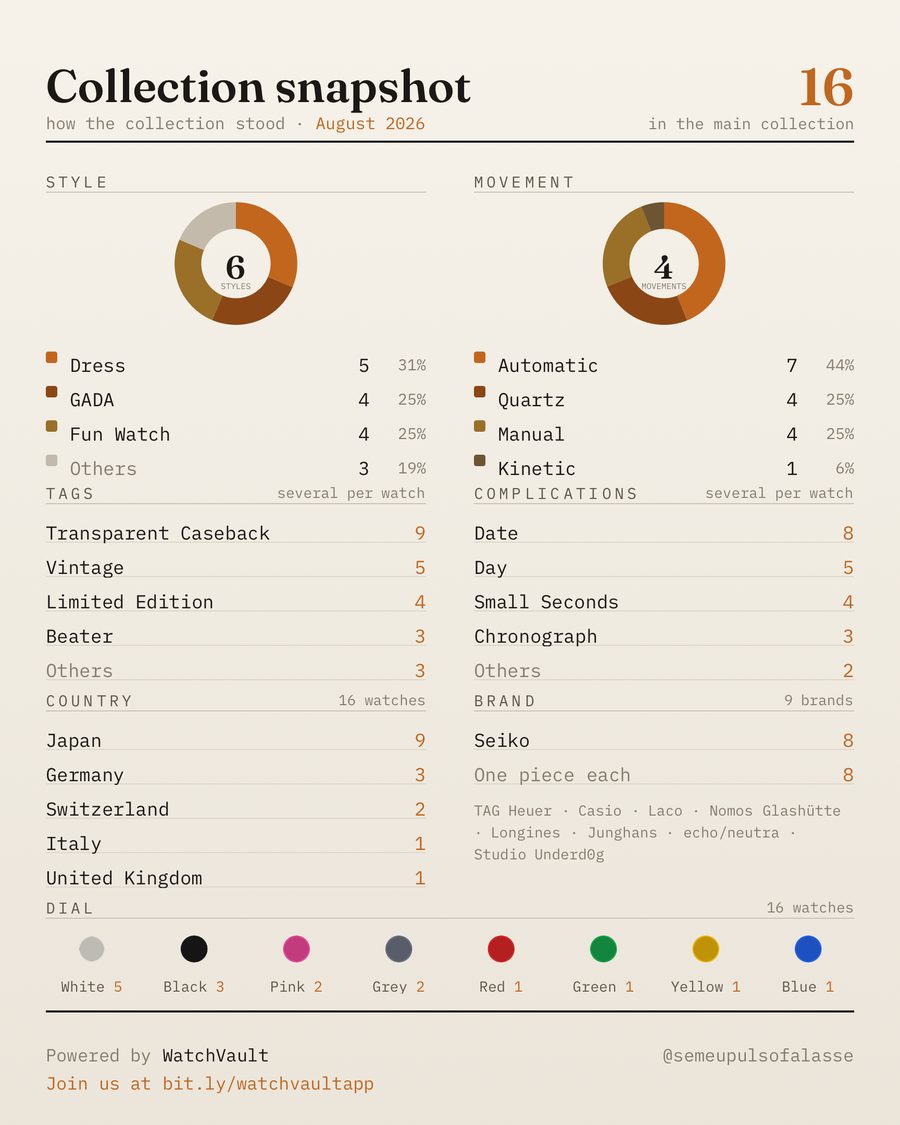
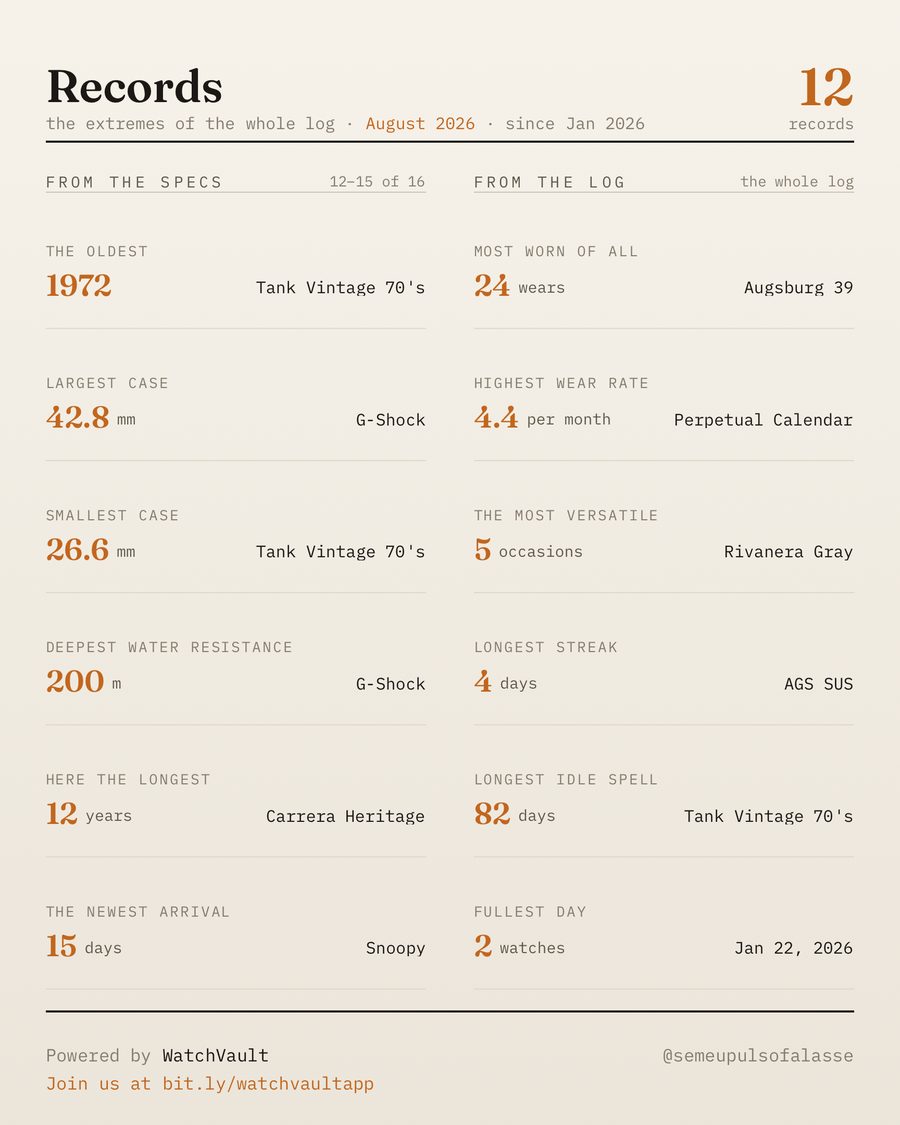
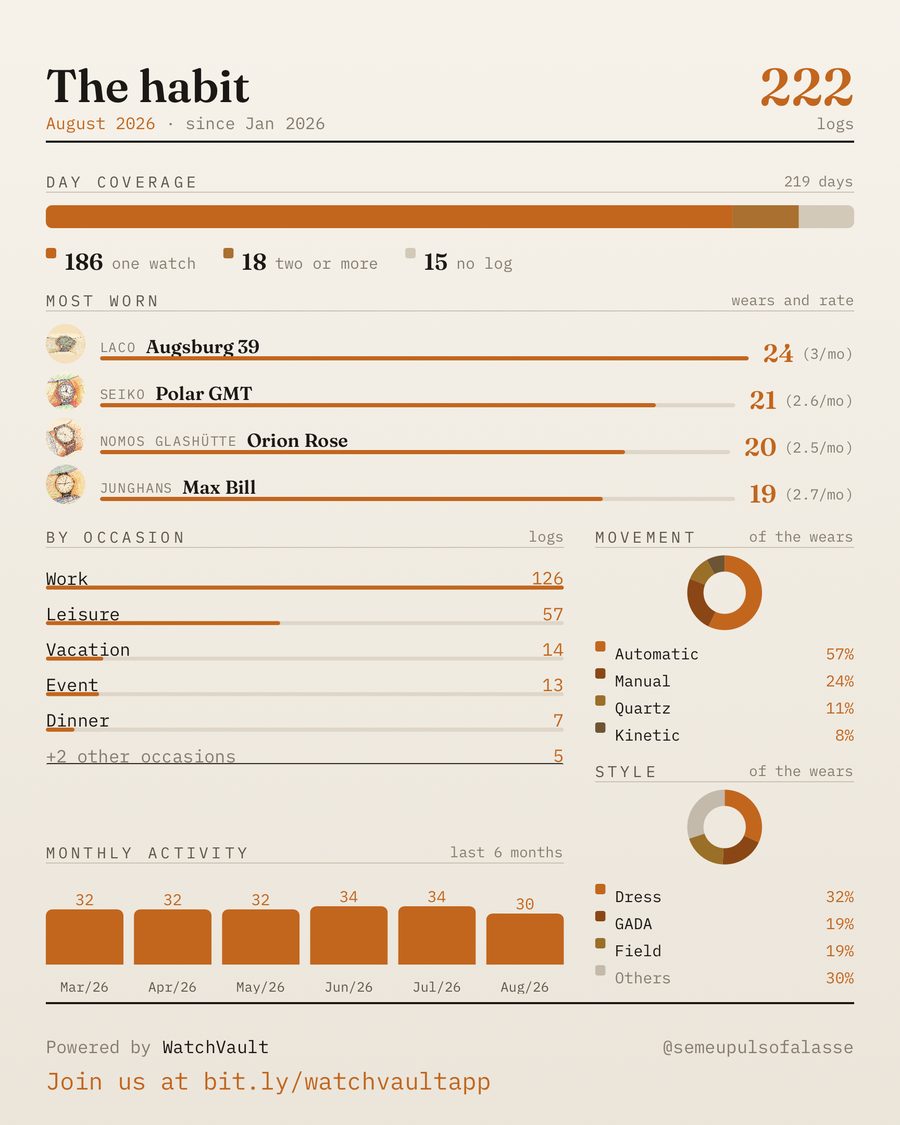
The whole month as video
Beyond the cards, an animation of what you wore over the period, with the month's champion at the end. Download and post.
Your data leaves whenever you want
Collection and wear history as CSV, one click. Nobody is locked in: if the app doesn't work for you, you leave with everything you typed.
Anyone can do the research. Crossing it with the wear, not so much.
The long version of the content posts. A piece's story doesn't fit in nine carousel slides. Here it does, and it ends with what my log says about that watch.
It makes sense if you…
- →have lost track of when you last wore each piece
- →own more watches than wrists and actually wear them all
- →want a blunt opinion on your next acquisition
- →are thinking of trimming and want to decide by wear, not by feel
It doesn't if you…
- →own three watches and remember all of them
- →want market valuations or investment tracking
- →are looking for a watch social network: there is no feed and no followers
- →don't intend to log anything. Without the habit there is nothing to give back
There is no product team here. There is a collector who got tired of not knowing.
I wrote Horalog for myself, because no spreadsheet survived the question “how long since I wore this?”. Every screen exists because I needed it on a specific day, with a specific watch in my hand.
Two hundred and nineteen days without skipping an entry. Every number on this page comes from here. None of it is sample data, none of it is a demo screen.
But a one-user tool doesn't mature. My collection has a shape, and that shape doesn't cover racing chronographs, real diving, thirty-piece collections or three-piece ones. That is why the beta is open: it needs to meet collections unlike mine to find out what's missing.
Open access during the beta, free. In exchange I want what broke, what was missing and what you found useless, bluntly.